
🐠 The Underwater World of the Andaman Islands
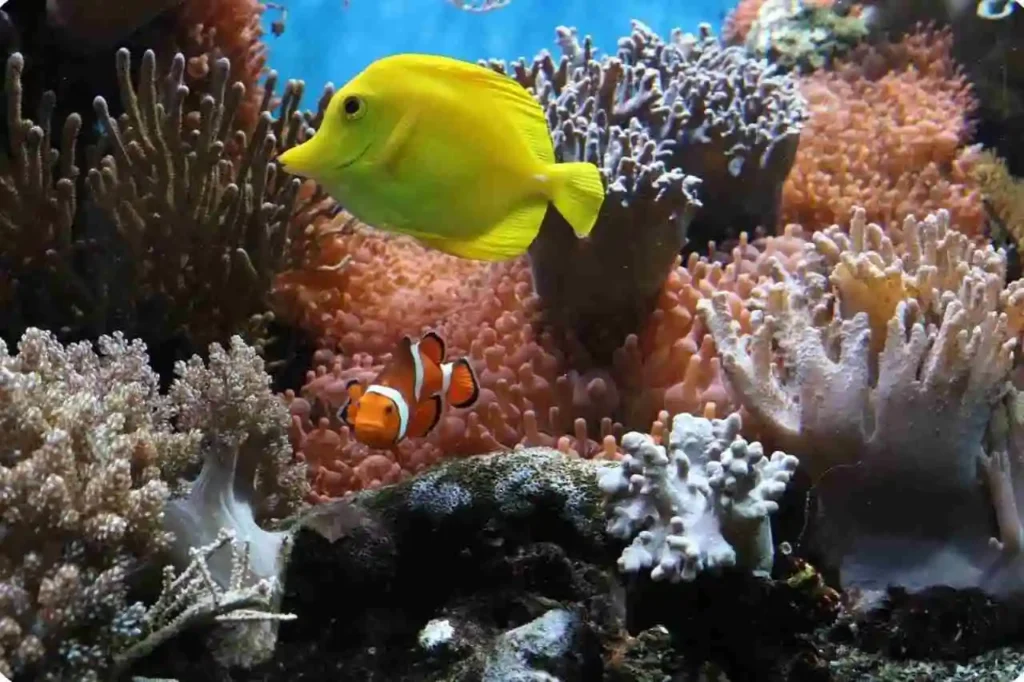
The underwater world of the Andaman Islands is far more beautiful than what we see above the sea. This place is also known as the “Sea of Jungle.” The stunning coral reefs here are extremely important for both fish and humans. Many species, such as fish, turtles, starfish, and octopuses, call this place their home.
• Importance of Coral Reefs for Humans
Coral reefs are very helpful for humans as well. They provide protection from storms, heavy rains, strong winds, and high waves. In a way, they act as natural bodyguards, and they do this for free. Coral reefs also help reduce CO₂ in the atmosphere, keeping both the air and the ocean clean, which allows marine life to survive.
• Marine Life in Coral Reefs
Fishes raise and nurture their young here, and many species are so beautiful that it feels like making friends with them. This is why the underwater world is so mesmerizing. Tourists come from all over the world to enjoy scuba diving and snorkeling, while millions of people earn their livelihood from the coral reefs, which also boosts the local economy.
• Threats to Coral Reefs
Unfortunately, humans often fail to protect this beautiful world. Climate change, pollution, and overfishing are damaging coral reefs, causing them to turn white and slowly die.
Next, we will discuss coral reefs in more detail.
🌊 Andaman and Nicobar Coral Reefs
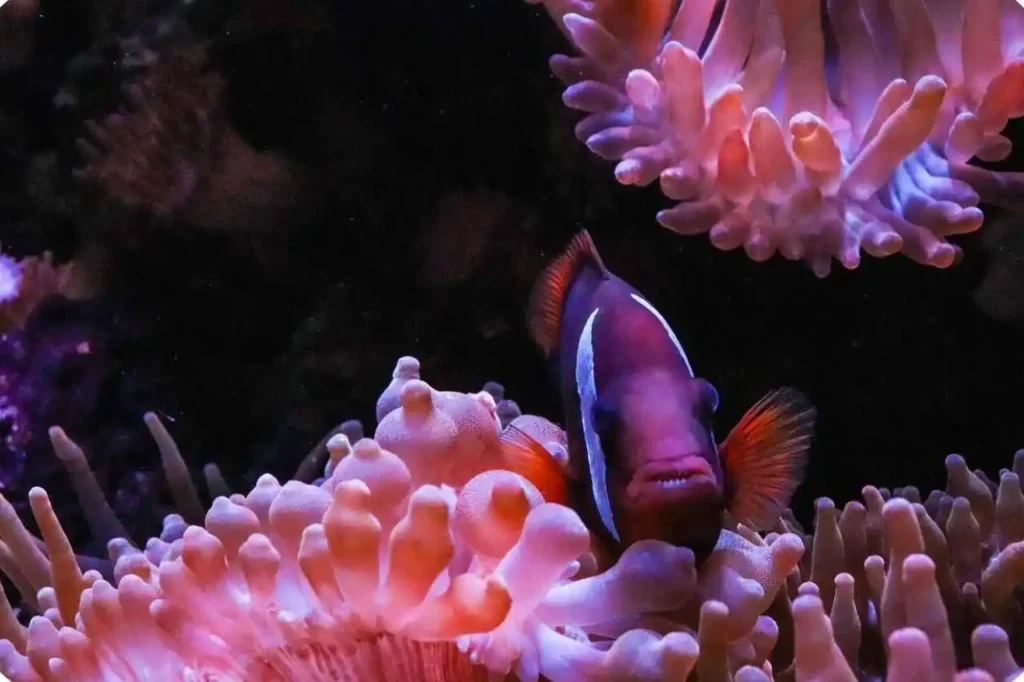
The colorful coral reefs of India are located in the Andaman & Nicobar Islands in the Bay of Bengal, spreading over an area of 2,300 sq. km. These coral reefs are distributed across different parts of the Andaman Islands.
• North Andaman
In places like Diglipur, North Reef, and Landfall Island, small reefs (fringing and patch reefs) are found, supporting a wide variety of species.
• Middle Andaman
Islands like Middle Strait, Rutland, and Baratang are home to fringing reefs that are colorful and ideal for coral snorkeling.
• South Andaman
Popular tourist destinations like Havelock, Neil, and Little Andaman have the largest and healthiest reefs, making them famous for scuba diving.
• Nicobar Islands
Car Nicobar and Great Nicobar Islands feature pristine and unique coral species.
• Why Andaman Reefs Are Special
These four regions together make up the full Andaman archipelago. The water here is clean and clear, allowing sunlight to penetrate easily, which helps the reefs grow. This is why more than 260 types of corals and over 600 species of fish are found here.
Rare animals like dugongs (also called sea cows because they feed on plants) are also found in these waters, making it a safe habitat for them.
🐢 Types of Coral in Andaman
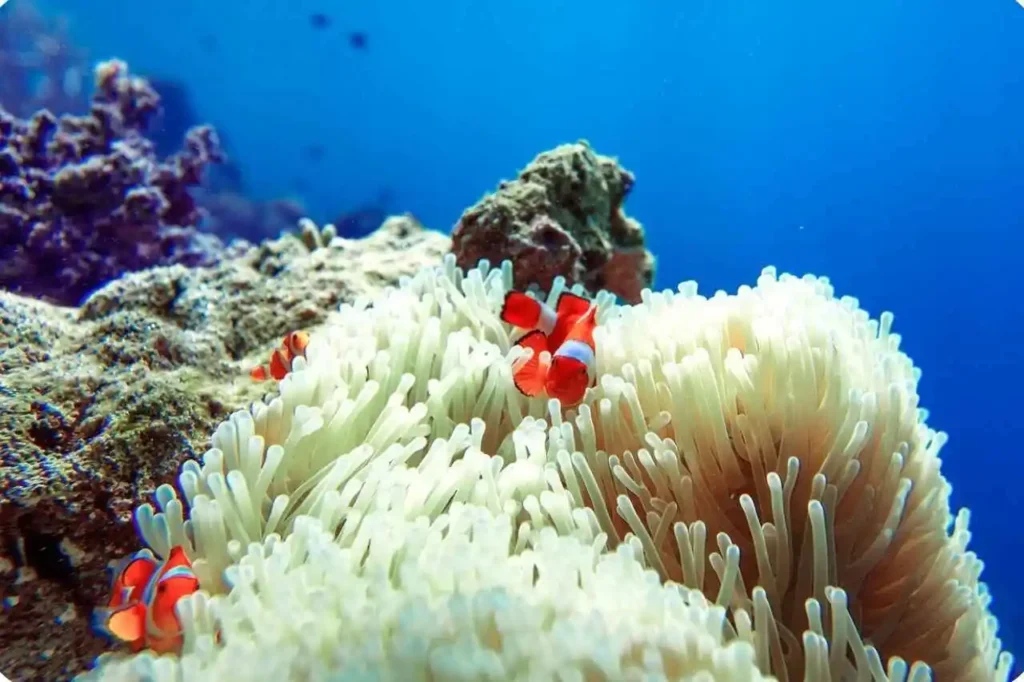
Corals are of two types: hard and soft.
• Hard Corals
Hard corals grow slowly but last for a long time, providing protection and entertainment for humans, fish, and other animals. Their bodies are rigid and solid, made of calcium carbonate. Over time, these corals form coral reefs that look like beautiful underwater cities. Some popular hard corals include staghorn coral, brain coral, table coral, and elkhorn coral.
• Soft Corals
Soft corals, which give the sea its vibrant colors, are found in various shades such as pink, red, yellow, and purple. They are quite flexible and can be gently moved by hand. There are several types of soft corals:
- Sea fans – shaped like fans.
- Leather corals – smooth and tough, providing a safe hiding place for fish.
- Dendronephthya – very bright and colorful, so striking that anyone who sees it falls in love with it.
In the Andaman Islands, there are around 150 species of hard corals and 50 species of soft corals.
🦀 Threats to Andaman Coral Reefs
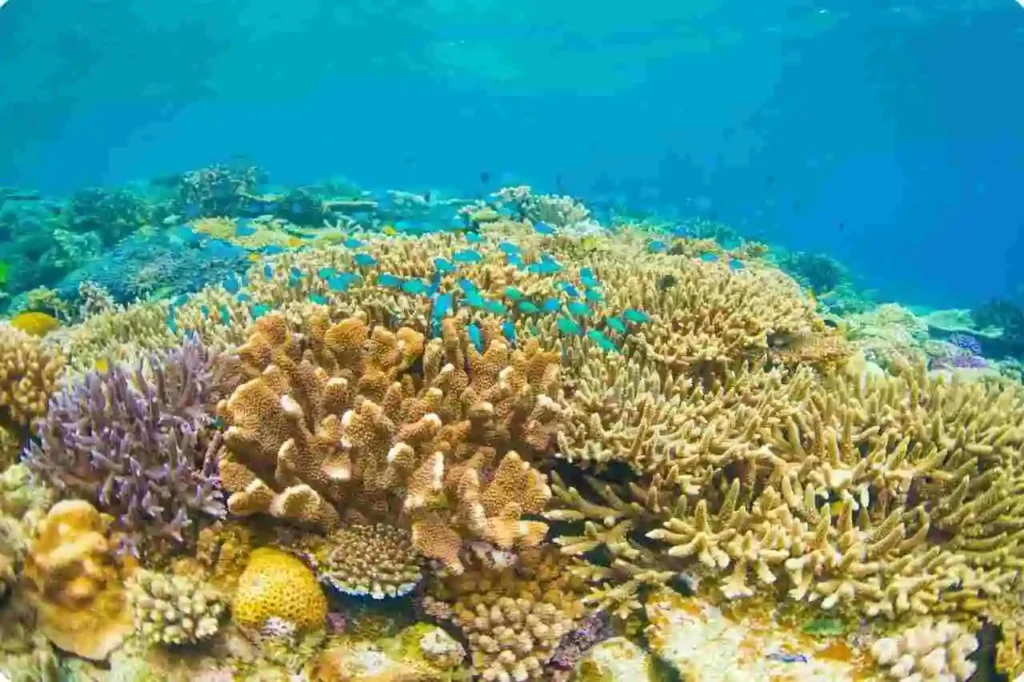
The corals of the Andaman Islands are very famous and attract many tourists. Unfortunately, due to climate change, ocean water is gradually warming, which is harmful to the corals. The rising temperature causes the algae in the corals to die. These algae provide corals with both their color and food, so when they die, the corals turn white. This phenomenon, known as mass bleaching, has been observed in 1998, 2004, and 2010, when large areas of coral turned white and died. This had a severe impact on marine life and the ecosystem.
• Human Impact on Coral Reefs
Humans also harm corals in several ways. People use coral to beautify their home gardens or for decoration. Coral is broken and ground into powder, which is used as lime in construction. Heavy ship anchors can break coral reefs, and construction debris that ends up in the sea damages them further. Overfishing disrupts the balance of the ocean. Tourists touching or breaking corals during diving and snorkeling also cause damage.
• Pollution and Coral Health
Plastic pollution and waste from hotels, hostels, and other establishments enter the ocean, polluting the water and covering the corals, which hinders their growth. Corals need clean water and sunlight to thrive, but pollution prevents them from getting these essentials. Ultimately, the negative effects of harming corals are also felt by humans.
Link :Andaman full Guide
🐌 Conservation Efforts to Protect Coral Reefs in Andaman

• Government Initiatives
To protect corals, the government has taken several actions. In the Andaman & Nicobar Islands, there are over 23 Marine Protected Areas (MPAs) dedicated to protecting marine life. These include Ritchie’s Archipelago, North & Middle Andaman Marine National Park, and Mahatma Gandhi Marine National Park. Their main purposes are to prevent overfishing, protect corals and marine animals, and manage tourist areas effectively.
• Role of Organizations and NGOs
Organizations like WWF (World Wide Fund for Nature), the Andaman & Nicobar Environment Team, and Seacology involve local communities to raise awareness about coral reefs and how to protect them. These NGOs also use scientific methods to preserve corals. For example, in coral nurseries, small corals are grown in safe areas until they are ready to be transplanted back to the reef. Another technique is creating artificial reefs, where corals are attached to concrete or specially designed structures, giving them a “new home.” These practices effectively help corals survive and regenerate.
• Legal Protection and Awareness
Legal measures such as the Environment Protection Act, 1986, and the Wildlife Protection Act, 1972 protect nature and wildlife, including coral reefs, mangroves, and sea turtles in the islands. The government also raises awareness among people to reduce plastic use, avoid touching corals, and practice snorkeling and diving only in permitted areas. These important measures aim to keep coral reefs safe, healthy, and sustainable for future generations.
🪼 Tourism and Coral Reefs in Andaman
• Exploring the Vibrant Underwater World
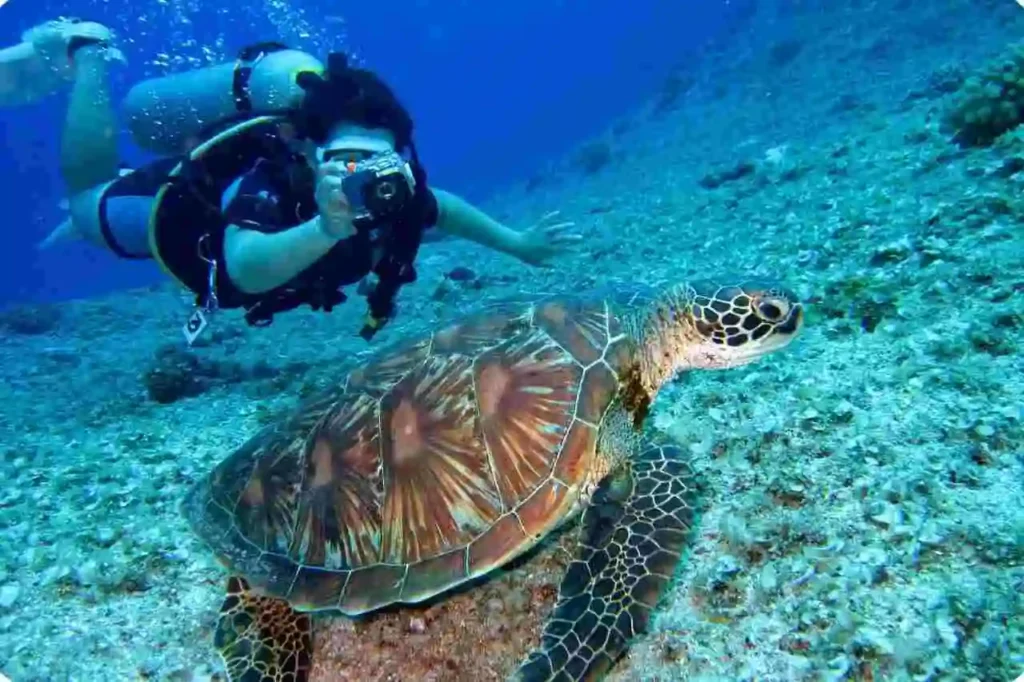
To explore the vibrant underwater world, the Andaman Islands have some famous spots where you can experience coral reefs up close and capture these beautiful moments on camera. Radhanagar Beach and Elephant Beach are considered among the best beaches in the world. Here, you can enjoy activities like snorkeling, scuba diving, glass-bottom boat rides, and kayaking.
• Popular Tourist Spots for Water Activities
On Neil Island, beaches like Bharatpur Beach, Laxmanpur Beach, and the Natural Bridge offer great opportunities for snorkeling, swimming, and other water activities. These locations are ideal for both adventure lovers and nature enthusiasts who wish to experience the beauty of the underwater world.
• Responsible Tourism Practices
It is important to be careful and avoid harming the coral reefs. Even a light touch can damage them, and collecting shells or pieces of coral is prohibited. Chemical sunscreens can also harm corals, so it is advised to use eco-friendly options. Avoid chasing or grabbing fish and always follow local eco-guidelines to enjoy the Andaman Islands responsibly while helping preserve marine life for future generations.
Conclusion
Andaman is one of the most beautiful and important places in India. Every little detail adds to its uniqueness, and among them, coral reefs play a vital role. The survival of coral reefs is essential for both Andaman and the environment. Protecting them is not only the government’s responsibility but also the duty of every individual—whether a tourist, a local resident of Andaman, or anyone who lives in harmony with nature.
People should be made more aware of the importance of coral reefs through social media and local campaigns so that these corals can survive for many more years and continue to offer us their breathtaking beauty.