
❄️ Introduction – Why Himachal Pradesh Apple is Famous Across India
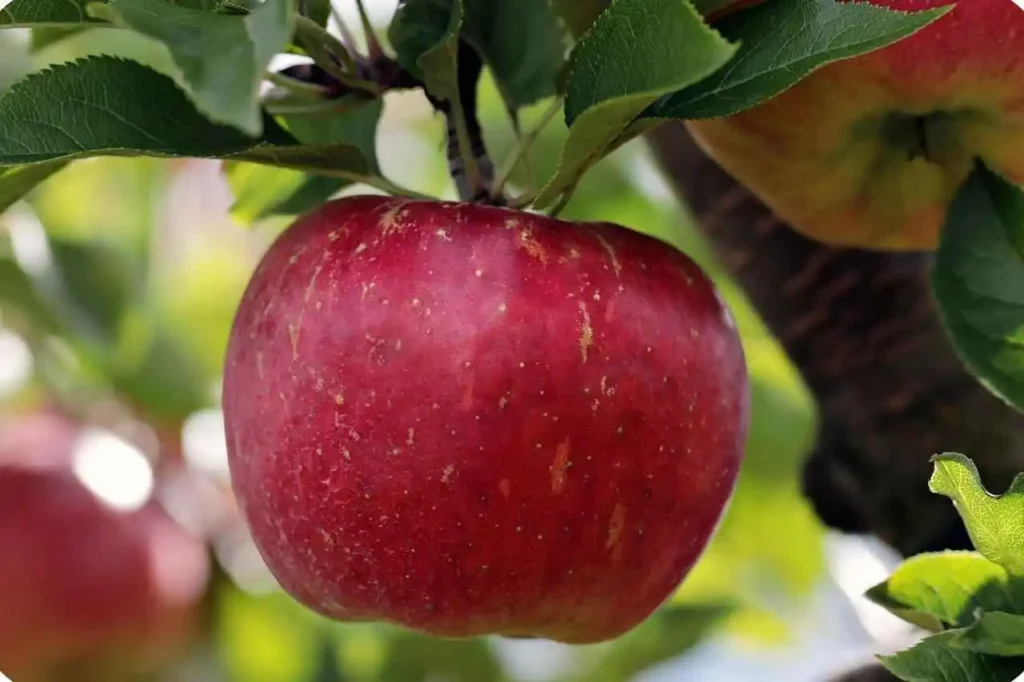
Himachal Pradesh is lovingly known as the “Apple Bowl of India.” If you ever visit Shimla, Kinnaur, or Manali, you will see apple orchards spread across the hills as far as the eye can see. The cool breeze, clean water, and snowy winters together create perfect conditions for apple cultivation.
Since Himachal Pradesh is a mountainous state, most apple orchards are located at altitudes between 5,000 and 9,000 feet. At these heights, the temperature remains quite low, which is ideal because apple trees require a proper chilling period. After receiving enough winter chill, when sunny days and mildly warm temperatures arrive, the apples gradually turn red and develop sweetness.
Farmers often say that bright sunlight during the day and cool temperatures at night result in better color and taste. Because of this, Himachal apples have a bright red color, a crispy texture, and a balanced sweet and slightly tangy flavor. It is not an artificial process, it is a gift of nature.
For these reasons, Himachal apples start arriving in the market between August and October, and buyers eagerly wait for them. During the season, a large share of apples in Asia’s biggest fruit market, Azadpur Mandi, comes from Himachal Pradesh. Traders and agents say that once Himachal apples arrive, buyers quickly finalize deals because they trust the quality.
Today, even on online grocery apps and in large supermarkets, you will often see “Himachal Apple” clearly mentioned on the box. This is not only to show the location but also to represent trust and quality.
Out of all the apples produced in India, about 20–25% come from Himachal Pradesh. In simple terms, one out of every four to five apples in India is from Himachal. According to horticulture estimates for 2022–23 and 2023–24, the state produces around 20 to 25 lakh metric tonnes of apples every year. This number can vary slightly each year because apple farming depends a lot on weather conditions.
In terms of apple production in India, Jammu & Kashmir ranks first, while Himachal Pradesh holds the second position. This achievement is possible because of the hard work of local farmers, who make sure that both high-quality and large quantities of apples reach markets across the country.
🌱History of Apple Farming in Himachal Pradesh
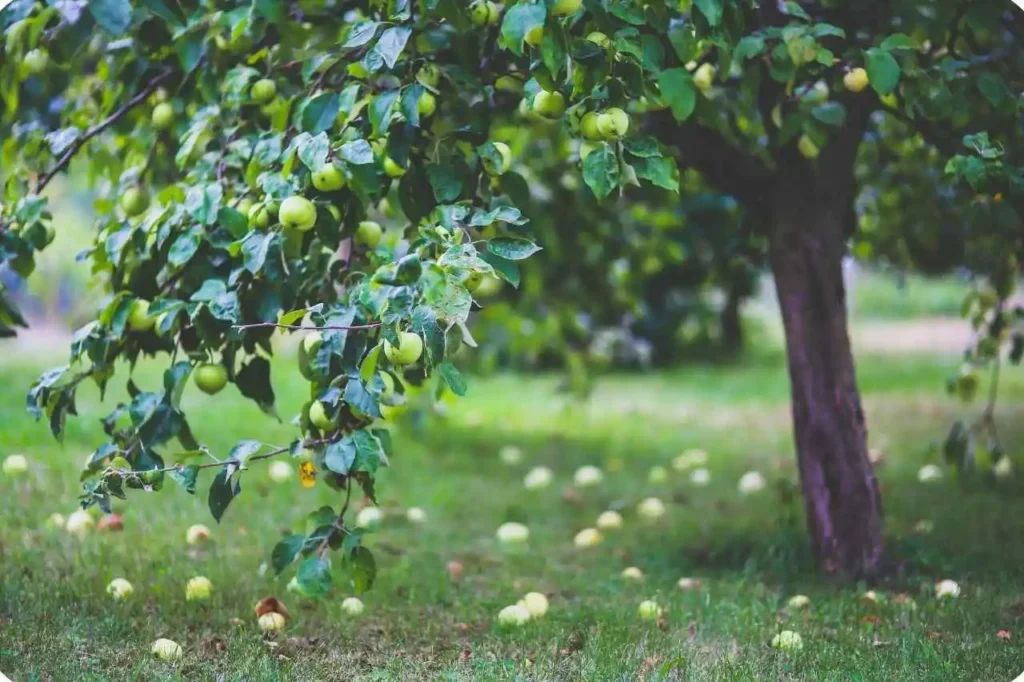
Himachal Pradesh, known as the “Apple State of India,” has a very interesting apple farming history. Around 1904, an American named Samuel Evans Stokes Jr. (later known as Satyanand Stokes) observed that the region had a cold climate and mountainous terrain similar to apple-growing areas in the United States. He wondered why high-quality apples could not be grown there.
In 1916, he planted saplings of a famous American variety, Red Delicious, in Kotgarh (Shimla district). It was a major experiment, and there was no guarantee of success. However, when the trees matured and produced large, bright red apples, it became clear that commercial apple cultivation was possible in Himachal. Apples did exist in the region before this, but they were mostly wild and small in size, with average taste. They were not considered a reliable source of business or income. Stokes trained local farmers in orchard planning, tree care, and scientific farming methods. These efforts laid the foundation for modern apple farming in Himachal Pradesh.
Around 1926, apple production began at a commercial level. Gradually, more farmers started planting apple orchards, and village incomes began to rise. In reality, Satyanand Stokes did not just plant apple trees—he laid the foundation for a new rural economy in the hill regions of Himachal.
Between 1926 and 1970, apple farming was not very organized. Farmers grew plants from seeds, which resulted in trees of varying types and inconsistent fruit size and quality. Orchards were planted without proper spacing, pruning was not done scientifically, and there were limited methods to control pests and diseases. Cold storage facilities were almost nonexistent. Apples were mostly sold in local markets, and transporting them to distant cities was very difficult. This was a learning phase during which farmers experimented and gradually gained experience.
Between 1970 and 1990, conditions began to improve. The government started giving serious attention to horticulture. Training programs were introduced, and better, more productive varieties were promoted. The use of chemical fertilizers and pesticides increased, making production more stable. One of the biggest improvements was road connectivity. Better roads in the hills made it easier to transport apples to markets in Delhi, Chandigarh, and other states. During this period, apple farming became a reliable source of income.
Since 1990, modern and scientific apple farming practices have transformed the sector. High-density plantation (HDP) methods are now used, allowing more trees to be planted in less space. Special rootstocks such as M9 are used so that trees bear fruit earlier. Drip irrigation systems supply water directly to the roots. Anti-hail nets are installed to reduce damage from hailstorms. Grading and packing are done using machines to maintain quality and reduce damage. Earlier, apple farming relied mainly on experience and estimation; today, it is driven by knowledge, technology, and systematic planning.
As a result, production has increased significantly. Around 1950, total apple production was only about 3,000–5,000 metric tonnes. According to 2022–23 reports, production now ranges between 20–25 lakh metric tonnes (approximately 2–2.5 million metric tonnes). Achieving this level of production has been possible due to both farmers’ hard work and strong government support.
The state’s horticulture department provides technical guidelines and training, along with various subsidies. Under horticulture missions, modern nurseries have been developed. Organizations such as HPMC support cold storage and marketing, and infrastructure development has improved rural roads.
The history of apple farming in Himachal Pradesh clearly shows how an initiative that began in 1916 with a small orchard in Kotgarh has grown into an industry producing millions of metric tonnes of apples today.
🌳 Apple Farming in Himachal Pradesh – Complete Process (Step-by-Step)
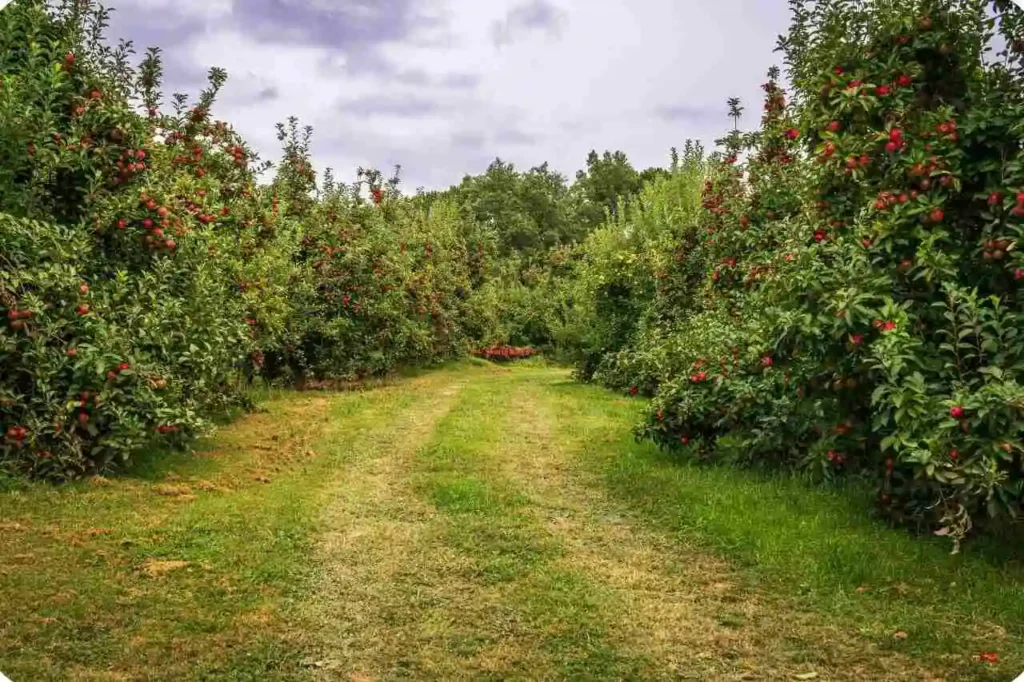
● Climate & Soil Requirement for Apple Farming in Himachal Pradesh
Apple trees grow best in cold regions. That is why Himachal Pradesh is considered one of the most suitable places for apple farming in India. The ideal temperature for growing apple trees is around 21°C to 24°C.
One of the most important factors for apple cultivation is winter chilling. During the winter season, apple trees need a certain period of cold temperature. This chilling period helps the trees produce better flowering and fruiting in the next season.
For a good apple crop, high altitude and proper rainfall are also important. Apple orchards generally require around 1000 to 1250 mm of annual rainfall.
In Himachal Pradesh, some areas are especially famous for apple production, such as Shimla, Kinnaur, Kullu, Mandi, Chamba, and Lahaul-Spiti. The climate of these regions is naturally suitable for apple cultivation. Along with a favorable climate, the soil in these areas is also suitable for growing apple trees.
● Apple Varieties Grown in Himachal Pradesh
Many varieties of apples are grown in Himachal Pradesh. Some are traditional varieties that have been cultivated for many years, while others are improved varieties that farmers are increasingly adopting.
The most famous variety is Royal Delicious. When people talk about apples from Himachal Pradesh, this variety is often mentioned. It has a deep red color and very high demand in the market.
Another popular variety is Red Chief. It also has a bright red color and starts producing fruits earlier compared to some other varieties.
Gala or Royal Gala is an early variety, which means it ripens earlier than many other apples. These apples are known for their sweet taste.
The Fuji variety is also quite popular. Fuji apples are known for being very sweet and juicy.
Another important variety is Golden Delicious. Unlike other varieties, its color is yellow instead of red.
Similarly, Granny Smith is a green-colored apple that has a slightly sour taste.
Different types of apples are grown in Himachal Pradesh, and they are widely liked and consumed across India.
● Plantation Season & Spacing in Apple Farming
There is a specific time for planting apple trees. If plantation is done during the right season, the plants establish themselves quickly and grow better in the future.
In Himachal Pradesh, apple plants are generally planted during the winter dormancy period. During this time, the trees are in a resting phase and their growth temporarily slows down. The best time for plantation is usually from December to March.
During this period, transplanting plants becomes easier. In areas with heavy snowfall, such as Kinnaur and parts of Lahaul-Spiti, farmers usually carry out plantation between February and March.
Pit preparation is also very important in apple farming. Farmers usually prepare the planting pits about one month before plantation. During this process, proper spacing between plants is also maintained.
Apple farming requires careful attention to many factors. When all these aspects are properly managed, farmers can produce a healthy and high-quality apple crop.
🌄 Apple Orchards in Himachal Pradesh – Where Are They Located?
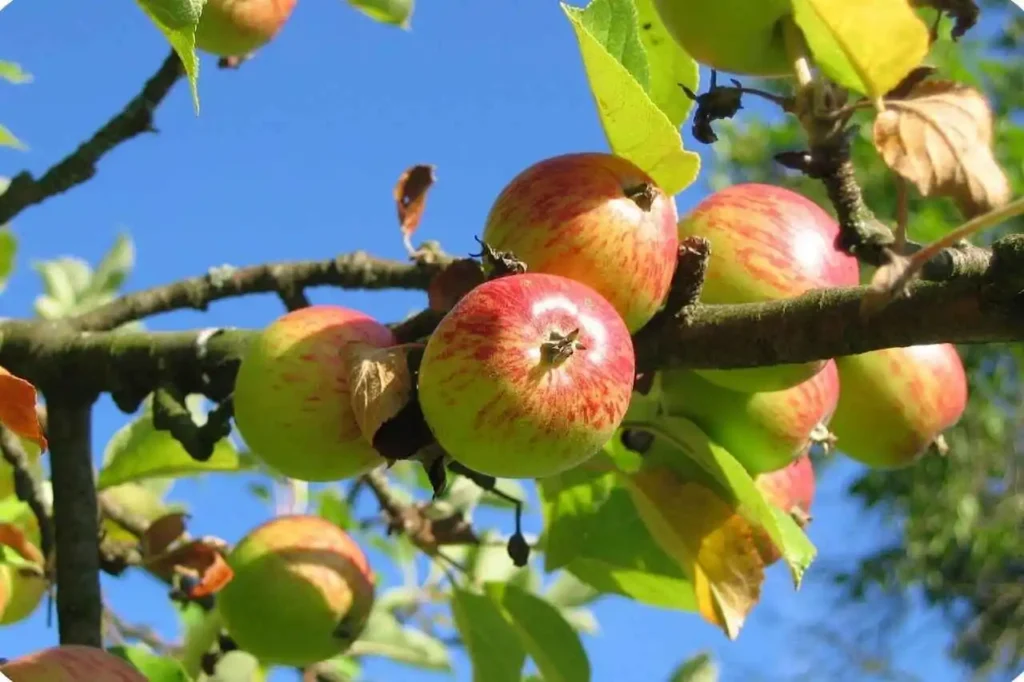
● Major Apple Growing Areas in Himachal Pradesh
Shimla District
Shimla district has many areas where apple orchards can be seen spread across long distances.
Kotgarh is known as the place where the first apple orchard in Himachal Pradesh was established. Apple farming in the region started from here.
Thanedar, located near Kotgarh, is famous for its large apple orchards.
Narkanda is also a well-known place among tourists. Apple trees can easily be seen along the roadside in this area.
Rohru is another major apple-producing region in the Shimla district.
Kinnaur District
Kinnaur is a very cold and mountainous district. Because of its high altitude, the apples grown here are known for their excellent quality.
Some important apple-growing areas in Kinnaur include Kalpa, Sangla Valley, Reckong Peo, and Nichar. Apples from these regions are known for their premium quality.
Kullu District
When you travel to Kullu or Manali, apple orchards can easily be seen along the roadsides.
Important apple-growing areas include Manali, Naggar, Raison, and Bajaura.
Near Manali, there are also farm stays and homestays where visitors can stay and get the chance to see apple orchards closely.
Mandi District
Apple farming is also practiced in some parts of the Mandi district, such as Karsog Valley and the Chachyot area.
In these areas, many apple orchards can be seen spread across the hills.
Chamba District
Chamba is a beautiful mountainous district where apple farming is practiced in certain regions such as Tissa, Pangi Valley, and Bharmaur.
In these areas, apple cultivation is mainly done at the local farming level.
● Famous Apple Orchards in Himachal Pradesh (For Tourists)
Himachal Pradesh has several places where tourists can visit real apple orchards.
The Kotgarh apple belt in Shimla is famous for its old apple orchards located in the hills.
Thanedar, near Kotgarh, is a beautiful area with apple trees spread across large fields. Some places also offer farm stays where visitors can stay and explore the orchards closely.
In Sangla Valley of Kinnaur, apple orchards can be seen along the riverbanks and mountain slopes.
In Manali and Naggar in Kullu district, apple trees can easily be seen along the roads while traveling in the region.
Karsog Valley in Mandi is a peaceful area located between Shimla and Mandi. Apple farming is quite common here, and many large orchards can be found in this valley.
● Agro-Tourism Opportunities in Himachal Pradesh
In recent years, agro-tourism has slowly become popular in Himachal Pradesh.
Agro-tourism means tourists do not only visit the mountains for sightseeing, they also get the chance to see and understand farming activities closely.
In some areas, local farmers and homestay owners allow visitors to explore their apple orchards. Tourists can walk through the orchards and see how apple trees are grown.
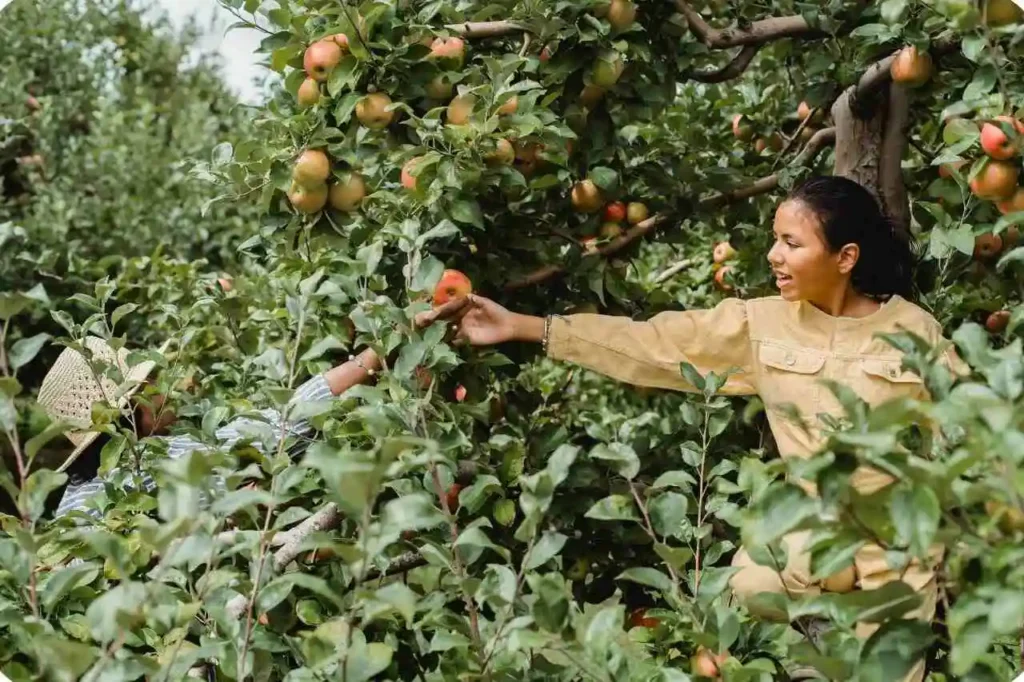
Sometimes visitors also get the opportunity to pick apples directly from the trees. During orchard visits, tourists can also taste fresh apples directly from the farm.
● Best Time to Visit Apple Orchards
May to June is the time when small apples can be seen growing on the trees.
From July to August, apples continue to grow and develop in size.
August to October is considered the best time to visit apple orchards because it is the apple harvesting season, and visitors can also enjoy the apple-picking experience during this time.
📈 Economic Importance of Himachal Pradesh Apple
● Contribution to State GDP
Apples play a very important role in the economy of Himachal Pradesh. The agriculture and horticulture sectors together contribute about 8–10% to the state’s GDP, and apple farming holds a significant share within this sector.
Every year, the total value of apple production in Himachal Pradesh usually reaches around ₹4000–5000 crore. This number can vary slightly because both production levels and market prices change every year.
Apple farming also creates employment for many people in the state. For example, apple orchard owners (farmers) take care of their orchards throughout the year. Workers in the orchards perform tasks such as pruning (cutting branches), spraying pesticides, and harvesting apples.
In addition, horticulture experts guide farmers on how to properly maintain and manage the trees.
Employment opportunities are not limited to orchards. When apples are sent to the market, many other sectors also benefit.
Box manufacturing companies produce apple packing boxes. Packaging industries help in packing the apples properly. Truck and logistics services transport apples to different markets. Cold storage and warehouses store apples for a longer time. Fruit market traders and workers also depend on the apple trade.
Overall, it is estimated that around 2–3 lakh families in Himachal Pradesh depend on apple farming for their livelihood.
● Export Potential
Apples grown in Himachal Pradesh have high demand across India. Most of the apples produced in the state are sold in domestic markets such as Delhi, Chandigarh, Punjab, Haryana, Rajasthan, and Gujarat.
Because of strong domestic demand, most Himachal apples are consumed within India.
In terms of international exports, only a small quantity is currently exported to Middle Eastern countries. However, exports are still limited because of several reasons.
The first major reason is the lack of proper storage infrastructure. Apples need modern cold storage and controlled atmosphere storage facilities to remain fresh for a long time, but these facilities are not available everywhere.
The second reason is grading and quality standards. In international markets, fruits must meet strict standards based on size, color, and quality. The grading system in Himachal is still developing.
Another challenge is high transportation costs. Since apples are grown in mountainous regions, transporting them to ports for international shipping is not easy.
Despite these challenges, Himachal Pradesh has strong potential to increase apple exports in the future if infrastructure, grading systems, and logistics improve.
Link: Himachal full Guide
🚫 Challenges in Apple Farming in Himachal Pradesh
● Impact of Climate Change
In recent years, climate change has become a major challenge for apple farming in Himachal Pradesh. Apple trees require a good amount of cold weather during winter to produce good-quality fruits. In farming terms, this cold requirement is called “chilling hours.”
However, in the past few years, winters in some parts of Himachal have not been as cold as before. This change is affecting apple farming in many ways. Apple trees produce fewer flowers, fruit setting becomes weaker, and the size and quality of apples decrease.
Because of this, apple production has reduced in some areas of Himachal Pradesh, especially in regions such as Lower Shimla and parts of the Kullu Valley.
● Unseasonal Rainfall and Snowfall
Apple farming in Himachal Pradesh depends a lot on weather conditions. However, in recent years, the weather pattern has become very unpredictable.
Sometimes rain comes at the wrong time, and sometimes snowfall is lower than usual. These irregular weather conditions create many problems for farmers and can negatively affect apple production.
● Rising Production Costs
Today, apple farming in Himachal Pradesh has become much more expensive compared to earlier times. Farmers now face higher costs from maintaining orchards to transporting apples to the market.
First, there is the cost of orchard maintenance. Farmers need to buy fertilizers and pesticides to keep the trees healthy and protect them from diseases.
After the apples are ready for harvesting, they must be packed properly for transportation. This requires cartons, trays, and other packaging materials, and their prices have increased a lot compared to the past.
Then the apples are transported from Himachal Pradesh to big markets such as Delhi, Chandigarh, or Punjab. If the apples need to be stored for a few days, farmers also have to pay cold storage charges, which increases the overall cost.
● Labor Shortage
Apple farming requires continuous care throughout the year, not only planting the trees. Farmers need workers for tasks such as pruning trees, spraying pesticides, and harvesting apples.
However, many areas of Himachal Pradesh are now facing a shortage of labor. Many young people are no longer interested in farming and prefer to move to cities or choose other types of jobs.
Because of this, many farmers depend on migrant workers from Nepal, Bihar, and Jharkhand. During the harvesting season, labor is sometimes difficult to find, and farmers often have to pay higher wages, which increases their overall farming cost.
● Market Price Fluctuation
Another major challenge in apple farming is unstable market prices. Sometimes farmers get a good price for their apples, while at other times the price becomes much lower. This uncertainty makes apple farming financially risky for many farmers.
🤖 Modern Technology & High-Density Apple Farming in Himachal Pradesh
● High-Density Plantation Model
Earlier, apple farming in Himachal Pradesh was done using traditional methods. At that time, about 250–300 apple trees were planted in one hectare of land.
However, many farmers are now adopting the High-Density Plantation (HDP) model. In this method, around 1200–1600 apple plants can be planted in one hectare.
In this system, large traditional trees are not used. Instead, farmers plant special dwarf rootstock varieties such as M9 and M26. These plants are shorter in height and start producing fruits much earlier.
In high-density orchards, plants are arranged in rows with a very small spacing of about 3–4 feet between plants.
The biggest advantage of this method is that apple trees start producing fruit within 3–4 years, while in traditional farming it usually takes 7–8 years for trees to start bearing fruit.
● Drip Irrigation System
Water is very important in apple farming. If plants do not receive the right amount of water at the right time, their growth and fruit production can be negatively affected.
For this reason, many farmers in Himachal Pradesh are now using the drip irrigation system. This system supplies water directly to the roots of the plants in a controlled manner, which helps improve plant growth and reduces water wastage.
● Organic Apple Farming
Some farmers in Himachal Pradesh are now focusing on organic apple farming. In this method, chemical fertilizers and pesticides are used very little or not used, and more natural inputs are applied.
Instead of chemical fertilizers, farmers use vermicompost, cow dung manure, and bio-fertilizers to provide nutrients to the plants.
However, in practical reality, organic apple farming is still not practiced on a very large scale in Himachal Pradesh. One major reason is that if chemical sprays are completely stopped, pest management can sometimes become difficult.
● Government Subsidy Schemes
Adopting modern technology in apple farming is not easy for every farmer because it often requires high initial investment. For this reason, the government provides financial support and subsidies to farmers.
In India, several schemes promote horticulture, and apple farmers in Himachal Pradesh also benefit from them.
One such scheme is the Mission for Integrated Development of Horticulture (MIDH). Under this scheme, farmers receive support for orchard development, planting high-density apple orchards, installing drip irrigation systems, and modernizing orchards.
Another major initiative in Himachal Pradesh is the Himachal Pradesh Horticulture Development Project (HPHDP). This project is supported by the World Bank, and its main goal is to modernize apple farming in the state.
There is also the Sub-Mission on Agricultural Mechanization, under which farmers receive subsidies on tools and machinery used in orchards.
● Modern Orchard Management Tools
Today, many apple farmers in Himachal Pradesh are also using modern tools and technologies to manage their orchards more efficiently.
For example, farmers use anti-hail nets to protect apple trees from hailstorms. Some farmers also use weather monitoring apps, which help them track weather changes and take timely actions to protect their crops.
❓ H2: Frequently Asked Questions About Himachal Pradesh Apple
When is the apple season in Himachal Pradesh?
The apple harvesting season in Himachal Pradesh usually lasts from July to October. Early varieties arrive in July, while the main crop reaches the market during August and September
Which apple variety is the most expensive?
Generally, Royal Delicious and Red Delicious varieties receive the highest prices in the market, especially when the apples have good size and color.
How much profit can be earned from apple farming?
Profit depends on the size of the orchard and the level of production. On average, farmers can earn around ₹5–10 lakh per hectare annually if production and market prices are good.
Which district is best for apple orchards in Himachal Pradesh?
Shimla district is the most famous for apple farming in Himachal Pradesh. Apart from Shimla, Kullu, Kinnaur, and Mandi are also important districts for apple production.
What is the best time to visit apple orchards in Himachal Pradesh?
The best time to visit apple orchards is August and September, because during this period apples are visible on the trees and the harvesting season is also in progress.
Conclusion
Apple farming in Himachal Pradesh is changing with time. Farmers are adapting to climate challenges, adopting high-density plantations, and exploring export opportunities. Modern techniques are improving productivity, while young farmers are also showing interest in horticulture. With better infrastructure and support, the future of Himachal’s apple industry looks promising.